How to Organize a Small Kitchen in a Rental Apartment 2026
A small rental kitchen can feel impossible. The counters are short, the cabinets are shallow, and every rule says you cannot drill, paint, or change anything permanent. The good news is that most rental kitchens are not short on space — they are short on a system.
This guide gives you that system in 18 renter-friendly steps. Everything here is removable, affordable, and deposit-safe. Work through it in one afternoon, and your kitchen will stay tidy long after the first clean-up.
1. Empty One Zone at a Time — Never the Whole Kitchen
Start small, or you will quit halfway. Pick one zone — one cabinet, one drawer, or one shelf — and take everything out of it. When the whole kitchen is spread across the floor, it feels worse before it feels better, and most people stop there.
One zone at a time keeps the kitchen usable while you work. Finish a zone completely, put it back together, and then move to the next one. By dinner, you will have visible progress instead of a bigger mess.
2. Sort Everything Into Keep, Move, and Let Go
Hold each item and ask where it actually lives in your life. Daily mugs, your one good pan, and the spices you use every week are ‘keep.’ The bread maker you used twice belongs in ‘move’ — to a high shelf, a closet, or a friend’s place. Broken gadgets, chipped mugs, and duplicates are ‘let go.’
Renters cannot add space, so editing is the cheapest storage you will ever buy. A good rule is one in, one out: every new kitchen item means an old one leaves. Small kitchens stay organized only when less keeps coming in than going out.
3. Measure Before You Buy a Single Bin
Rental cabinets look standard, but they rarely are. Measure the width, depth, and height inside each cabinet and drawer before ordering bins, racks, or shelf risers. A bin that is half an inch too wide is useless, and returns waste the whole afternoon.
Write the measurements on your phone and take them to the store, or keep them in a note while you shop online. Buy for the space you measured, not the space you wish you had — and start with one cabinet’s worth of bins to test the fit.
4. Set Up Zones: Prep, Cook, Clean, Store
A kitchen works when everything lives near where you use it. Put cutting boards, knives, and mixing bowls near your prep counter. Keep pots, pans, and cooking oil beside the stove. Store dish soap, sponges, and towels under or beside the sink.
Zoning stops the daily wandering that makes a small kitchen feel chaotic. When every item has a home near its job, putting things away takes seconds instead of minutes — and that is what keeps the system alive on busy weekdays.
5. Clear the Counters Completely, Then Add Back Only Daily Items
Take everything off the counters and clean the surface. Then add back only what you use every single day: the coffee maker if you brew daily, a knife block, and maybe a small tray for oil and salt. Everything else finds a cabinet home.
Clear counters make a tiny kitchen look and feel twice as big. They also give you actual workspace, which means less clutter migrates back during cooking. If an item sits untouched for a week, it does not earn counter space.
6. Use the Inside of Cabinet Doors
Cabinet doors are free, hidden storage. Stick-on hooks and over-door racks hold measuring spoons, pot lids, cutting boards, and cleaning supplies without a single hole in the wall. Choose removable adhesive hooks rated for the weight, and test one before loading it up.
This is one of the best renter tricks because it uses space that is otherwise wasted. Keep only light, flat items here so doors still close easily, and avoid anything that swings or rattles when you open them.
7. Add Shelf Risers Inside Cabinets
Most rental cabinets have one tall, empty shelf — and a stack of plates you have to unstack to reach the bottom one. A freestanding shelf riser splits that dead height into two usable levels, so mugs sit above plates and nothing gets buried.
Risers need no tools and no screws. Pick wire or bamboo ones that match your cabinet depth, and leave a little finger room at the front so you can slide items out without knocking the row behind them over.
8. Stack With Bins, Not Piles
Piles fall over; bins slide out. Group like with like in a bin — baking supplies together, snacks together, cleaning supplies together — and label the front so anyone in the home can put things back in the right place without asking.
Clear bins work best in deep cabinets because you can see what is inside. In a pantry, use one bin per category and leave a small gap between bins so you can pull one out like a drawer instead of unpacking the whole shelf.
9. Give Your Pantry a Simple System
Even a single pantry shelf works with a system. Put everyday items at eye level, heavy items low, and rarely used items up high. Use a lazy Susan for oils, sauces, and spices so nothing hides at the back, and a small tiered riser so cans stop hiding behind each other.
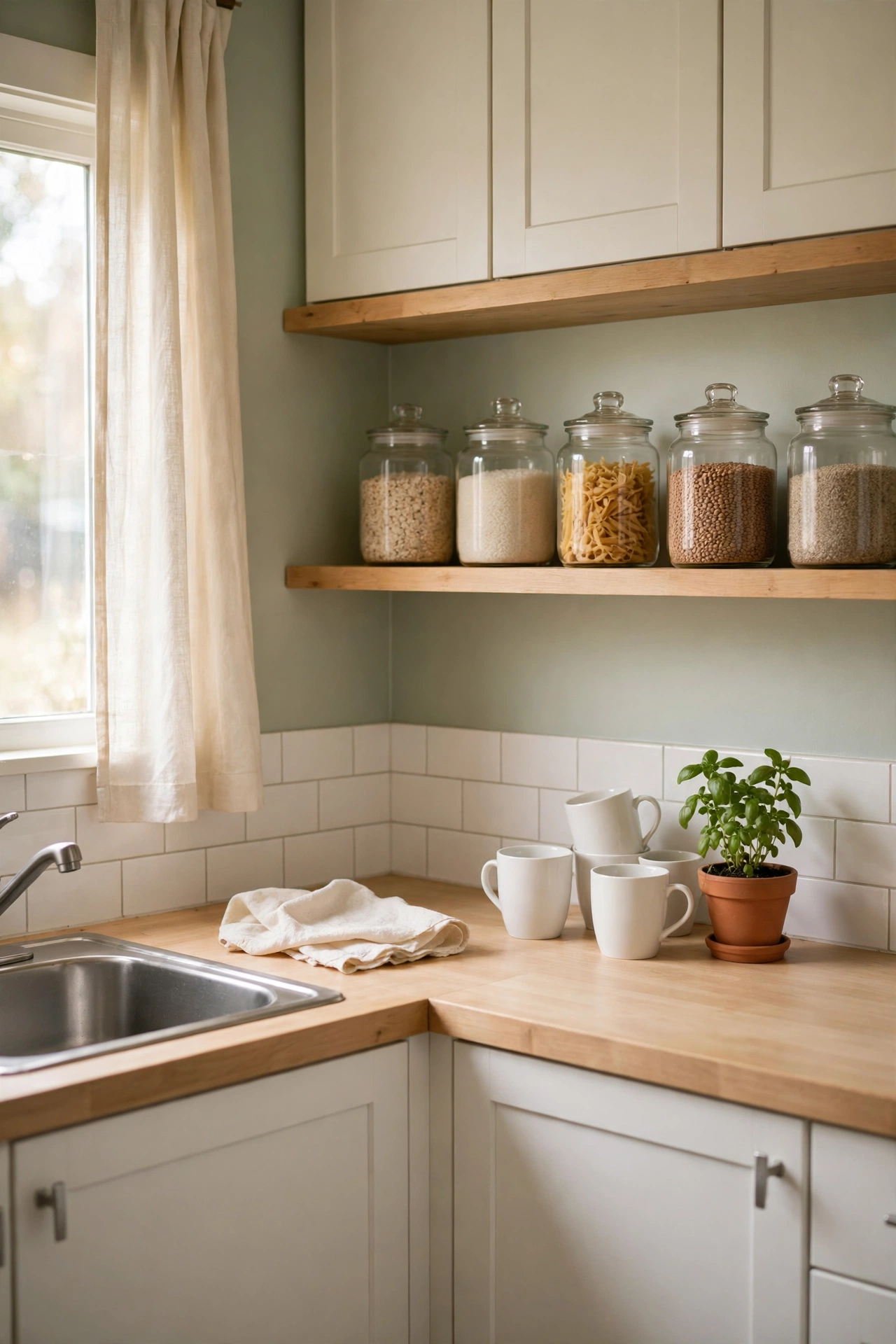
Decant only what you actually use often — flour, sugar, rice, coffee — into matching clear jars. Matching jars look calm, but the real benefit is practical: you can see at a glance what is running low before you are halfway through a recipe.
10. Tame Spices Without a Spice Rack on the Wall
Spices multiply fast and eat drawer space. Pick one home for them and commit to it: a small tiered shelf inside a cabinet, a spice rack on the inside of a pantry door, or a shallow drawer insert. Alphabetical order sounds fussy, but it saves you from buying a third jar of cumin.
Keep only the spices you used in the last three months in the main spot. Move the rest to a backup bin on a high shelf. When a spice is older than a year, it has lost most of its flavor anyway — let it go and free the space.
11. Store Lids Separately From Pots and Pans
Lids are the reason pot cabinets become a crashing mess. Stand lids upright in a small rack, a file organizer, or a tension rod fixed inside the cabinet, and stack the pots and pans themselves by size. You will stop dreading the sound of opening that cabinet.
If your cabinet is too shallow for a rack, hang lids on adhesive hooks inside the door instead. Either way, separating lids from pots is a five-minute fix that pays off every time you cook.
12. Make the Fridge Work Like a Pantry
A small rental fridge needs the same zones as the kitchen. Keep daily items at eye level, leftovers in clear containers at the front, and condiments together in one door shelf or a small bin. Label leftovers with the date so nothing mysterious grows at the back.
Clear, stackable containers beat a jumble of takeout boxes, and a small lazy Susan on a fridge shelf stops jars from getting lost. Wipe one shelf each week when you put groceries away, and the fridge will never need a dreaded deep clean again.
13. Use Vertical Space With Hooks and Tension Rods
When floor and counter space are gone, look up. Removable hooks under a shelf hold mugs, measuring cups, and utensils. A tension rod under the sink creates a spray-bottle holder, and another across a cabinet holds cutting boards upright.
Vertical storage is ideal for renters because it leaves no marks. Use adhesive hooks rated for the weight, clean the surface first so they stick properly, and pull them off slowly with heat from a hair dryer when you move out.
14. Create a Landing Spot for Daily Items
Keys, mail, a reusable bag, and the lunchbox all need one home — otherwise they colonize the counter. A small tray or a single hook by the kitchen door holds the daily pile in one tidy spot that takes ten seconds to clear.
The landing spot works because it is small on purpose. When it overflows, that is your signal to deal with the pile, not to buy a bigger tray. Keep it near the door you actually use, or nobody will use it at all.
15. Keep a Small ‘Cooking Caddy’ for What You Reach For Most
Put your most-used cooking items — oil, salt, pepper, spatulas, tongs — in one small caddy or tray beside the stove. Cooking becomes faster because everything is in one grab, and clean-up is faster because the whole caddy lifts off the counter for a wipe-down.
A caddy also protects your deposit: oil drips land on a washable tray, not on a countertop or wall you cannot repaint. Choose a tray with a small lip so bottles cannot slide off when you reach past them.
16. Fold the Sink Area Into the System
The sink is where clutter goes to hide. A small caddy or suction holder keeps dish soap, the sponge, and a brush together, and a dish rack that drains into the sink keeps the counter dry. Hang a hand towel on a removable hook instead of draping it over a cabinet handle.
Wash, dry, and put away in one short routine after each meal. In a tiny kitchen, a sink full of dishes is not just a chore — it takes away the only workspace you have, so keeping it clear is the highest-impact habit on this list.
17. Store Appliances You Rarely Use Somewhere Else
A small kitchen cannot hold every appliance on the counter. Keep out only the one or two you use daily. Move the blender, food processor, and slow cooker to a closet shelf, the top of a cabinet, or a rolling cart that tucks into a corner.
If you have to climb for an appliance, you will use it less — and that is fine, because that tells you how often you really need it. Bring it out for its job, clean it, and put it back the same day so the counter never becomes appliance parking.
18. Build a Ten-Minute Weekly Reset
Organization is not a one-time project; it is a short weekly habit. Once a week, set a ten-minute timer: clear the counters, wipe the surfaces, return stray items to their zones, toss anything expired from the fridge, and take out the trash and recycling.
Ten minutes a week beats a three-hour clean-up once a month, and it is the only step that keeps the other seventeen working. Put it on the same day every week — Sunday evening works well — and treat it like brushing your teeth: small, regular, and non-negotiable.
You do not need a bigger kitchen, a renovation, or permission from your landlord to feel at home in a rental. You need zones that make sense, storage that uses the space you already have, and a ten-minute weekly reset that keeps it all in place.
Start with one zone today — the cabinet that annoys you most — and work through the rest this week. Your future self, cooking dinner on a clear counter in a kitchen where everything has a home, will be glad you did.
Planning ahead for the holidays? See these small space Christmas decor ideas for renters for cozy, budget-friendly ways to dress up a small apartment without permanent changes.