17 Small Living Room Ideas for Tiny US Apartments in 2026
A tiny living room can feel like a puzzle with no solution. The sofa eats the wall, the TV has nowhere sensible to go, and every lease says the same thing: no drilling, no built-ins, nothing permanent. So the room ends up as a place you walk through, not a place you actually live in.
These 17 small living room ideas fix that without breaking a single lease rule. Everything here is removable, affordable, and deposit-safe, and each idea is built for real US rental apartments — small rooms, low budgets, and furniture that has to work twice as hard. Pick three or four, and your living room will feel bigger by the weekend.
- Put the Sofa on the Longest Wall
The single biggest layout mistake in a tiny living room is floating the sofa in the middle of the room. Push it against the longest wall instead, and you instantly free the floor in front of it for walking, playing, and living. The room stops feeling like an obstacle course.
Leave a clear path of about three feet from the sofa to the next piece of furniture. That one walkway is what makes a small room feel open instead of cramped, and it costs nothing at all — just ten minutes of pushing furniture.
- Choose a Loveseat Instead of a Bulky Sectional
A full sectional looks generous in the store and enormous in a 10-by-12 living room. A loveseat seats two comfortably, leaves room for a chair, and keeps the sightlines across the room open. In a tiny apartment, open sightlines are what make the space feel bigger.
If you need extra seating for guests, add a folding chair or a pouf that tucks under a side table when it is not needed. Seating you can move beats seating that owns the room — especially in a rental where the layout may change with the next lease.
- Let One Rug Define the Zone
In a studio or an open-plan apartment, a rug is the cheapest wall you will ever buy. One rug under the sofa and coffee table tells the eye exactly where the living room starts and ends, and the rest of the floor stays free for everything else.
Pick a rug big enough that the front legs of the sofa sit on it — a rug that floats in the middle of the floor makes the room look smaller, not bigger. Light, low-pile rugs work best in rentals because they are easy to clean and easy to roll up when you move.
- Go Vertical With Tall, Freestanding Shelves
When the floor is full, the only direction left is up. A tall, narrow bookshelf uses a strip of wall two feet wide and gives you five shelves of storage for books, plants, and baskets — without a single screw in the wall.
Keep the heaviest items low so the shelf stays stable, and leave one shelf partly empty so it reads as display, not clutter. If your lease allows a small removable anchor, use one for safety; if not, choose a low, wide unit that cannot tip.
- Buy Furniture That Hides Your Clutter
In a tiny living room, every piece of furniture should earn its floor space twice. A storage ottoman holds blankets and board games inside while it works as a footrest and an extra seat. A lift-top coffee table hides remotes, chargers, and laptops under its lid.
Before you buy anything new, ask what it stores as well as what it does. One good storage ottoman can remove a tote bag, a pile of throws, and a cluttered side table from your living room in a single swap.
- Use Light Colors and One Big Mirror
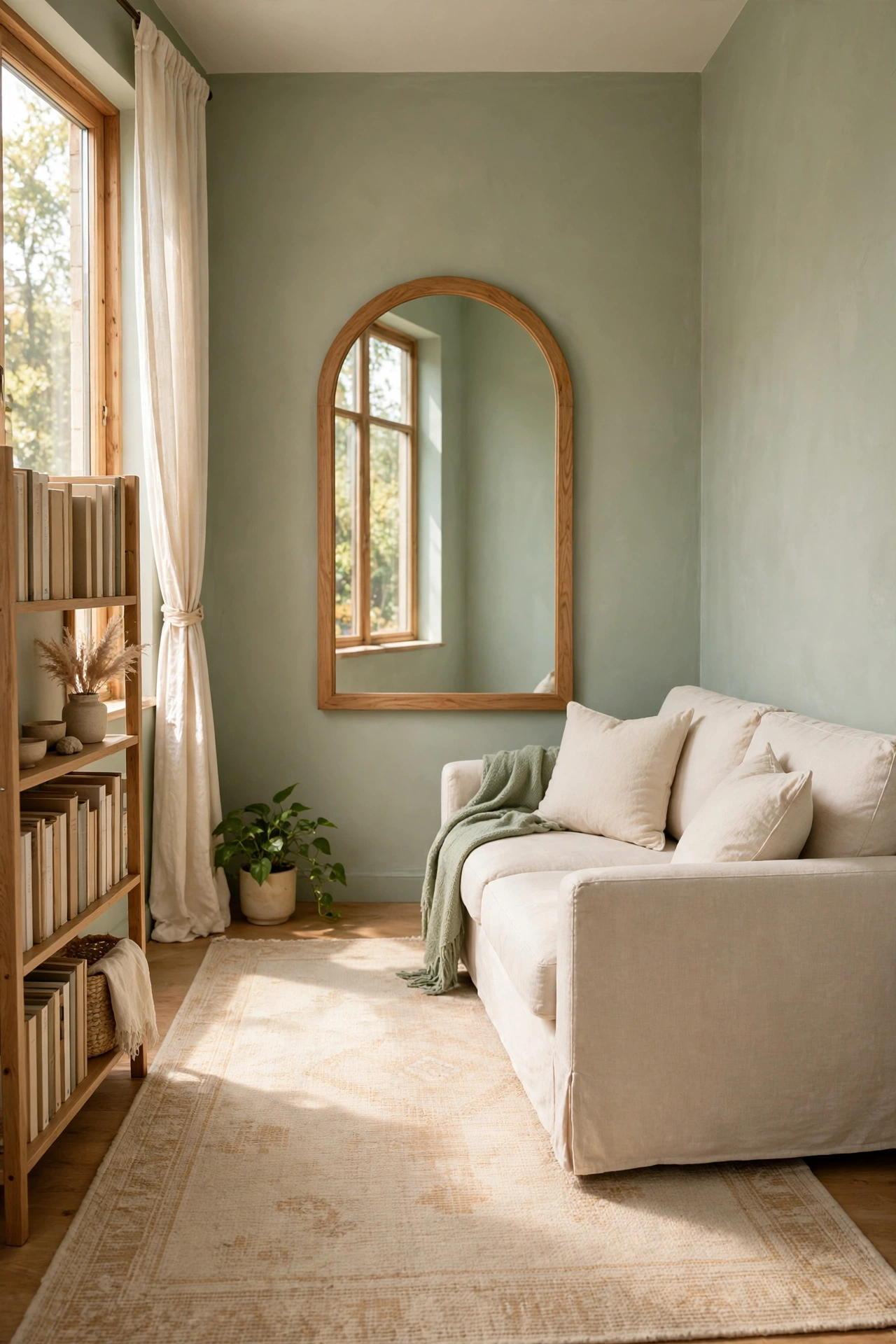
Dark walls and heavy furniture shrink a small room; light colors and reflection open it up. You cannot repaint a rental, but you can choose a light sofa cover, pale curtains, and a light rug — and hang one large mirror with a removable adhesive hook rated for its weight.
Place the mirror across from a window so it bounces daylight deep into the room. It doubles the sense of space for the price of one frame, and it comes down cleanly with a little heat from a hair dryer when you move out.
- Swap Table Lamps for One Floor Lamp
Table lamps eat the only flat surfaces a tiny living room has. One slim floor lamp in the corner behind the sofa gives the same warm evening light and frees both side tables for books, drinks, and a phone charger.
Choose a lamp with a small base so it tucks tight into the corner, and a warm bulb so the room feels cozy instead of stark. If you read in the corner chair, pick an adjustable arm — one lamp then does the job of two.
- Add a Folding or Wall-Mounted Side Table
A tiny living room still needs somewhere to put a coffee cup. A small folding side table opens when you need it and leans flat behind the sofa when you do not. A wall-mounted drop-leaf table does the same job with removable adhesive brackets.
Keep only one side table per seat, and keep its surface to one or two items — a book, a cup, a candle. A clear side table is what separates a calm room from a cluttered one, and it takes ten seconds a day to maintain.
- Hang Curtains High and Wide
Curtains hung just above the window frame make a window look small. Hang the rod a few inches below the ceiling and extend it past the window on both sides, and the same window suddenly looks tall and generous — and the room feels taller with it.
Use removable adhesive curtain rod holders so there are no holes to fill later, and choose light, flowing fabric that lets daylight through. When the curtains are open, they should frame the window, not cover it.
- Keep One Clear Walkway, Always
Every small room needs one path you can walk without turning sideways. Map it before you buy anything: from the door to the sofa, and from the sofa to the kitchen, with about three feet of clearance. Nothing — no basket, no plant, no shoe — lives on that path.
This rule sounds strict, but it is what keeps a tiny living room livable on a busy day. When the walkway is clear, the room feels twice as big, and you stop tripping over the same ottoman every evening.
- Match Your Baskets and Bins
Open shelves look tidy when the containers match and chaotic when they do not. Choose one style of basket or bin — same color, same material — for the whole living room, and label the ones that hold things you need to find fast.
Matching bins turn a shelf of random clutter into a calm, intentional display. Keep one bin empty on purpose: it is where new things go without breaking the system, and it is what keeps the shelves organized a month later.
- Mount the TV Low, or Skip the Stand
A TV on a bulky stand eats a whole wall of floor space. If your lease allows a removable adhesive mount rated for the weight, mount the TV at eye level when seated — about 42 inches from the floor to the center of the screen — and the stand disappears entirely.
If mounting is not an option, use a low, narrow console that doubles as storage for consoles, games, and DVDs. Either way, keep the cables in one small basket or a cord cover, because visible cables are the fastest way to make a small room look messy.
- Build One Cozy Reading Corner
A tiny living room does not need five seats in a row; it needs one corner that feels like yours. One comfortable chair, a floor lamp, a small side table, and a throw blanket turn an empty corner into the best seat in the apartment.
Angle the chair slightly toward the room instead of flat against the wall, and the corner feels intentional instead of leftover. This is the spot you will actually sit in every evening — which is the whole point of a living room.
- Use Nesting Tables Instead of One Big Coffee Table
A big coffee table owns the center of a tiny living room and blocks the walkway. Nesting tables give you the same surface when you need it — pull one out for guests, tuck it back when they leave — and take up half the floor space the rest of the time.
Choose round or oval tables with no sharp corners so nobody bruises a shin in the dark. A tray on top of the largest table corrals remotes and coasters into one tidy spot that takes seconds to clear.
- Fill Empty Corners With Plants
Corners are the most wasted space in a small living room, and plants are the easiest way to fill them. One tall plant in a corner adds life and height without using a single inch of usable floor, and hanging planters on removable hooks use the air above eye level.
Start with one plant that is hard to kill — a snake plant or a pothos — and add more only when the first one survives a month. Plants make a small room feel cared for, and they cost less than almost any other decor on this list.
- Give Every Surface a One-Tray Rule
Flat surfaces in a small room attract clutter the way a magnet attracts pins. The fix is simple: one small tray per surface, and nothing lives on that surface outside the tray. A tray on the coffee table, a tray on the console, a tray by the door.
When the tray is full, that is your signal to put things away — not to buy a bigger tray. This tiny rule keeps the room photo-ready with about two minutes of tidying a day, and it is the easiest habit on this list to keep.
- Reset the Room for Ten Minutes Every Week
A small living room drifts out of order faster than a big one, because there is nowhere for clutter to hide. Once a week, set a ten-minute timer: fluff the cushions, fold the throws, return stray items to their homes, and wipe the surfaces.
Ten minutes a week beats a three-hour clean-up once a month, and it is the only step that keeps the other sixteen working. Put it on the same day every week — Sunday evening works well — and treat it like brushing your teeth: small, regular, and non-negotiable.
A Tiny Living Room That Feels Like Home
You do not need a bigger apartment, a renovation, or permission from your landlord to love your living room. You need a layout that leaves a clear path, furniture that stores as well as it seats, light colors and a mirror to open the space, and a ten-minute weekly reset that keeps it all in place.
Start with one idea today — the sofa on the longest wall, one rug to define the zone, or a single storage ottoman. Fix that one spot, and the rest of the room will follow.